Electronic Proof of Delivery: What It Is and Why It Matters
Jump to section
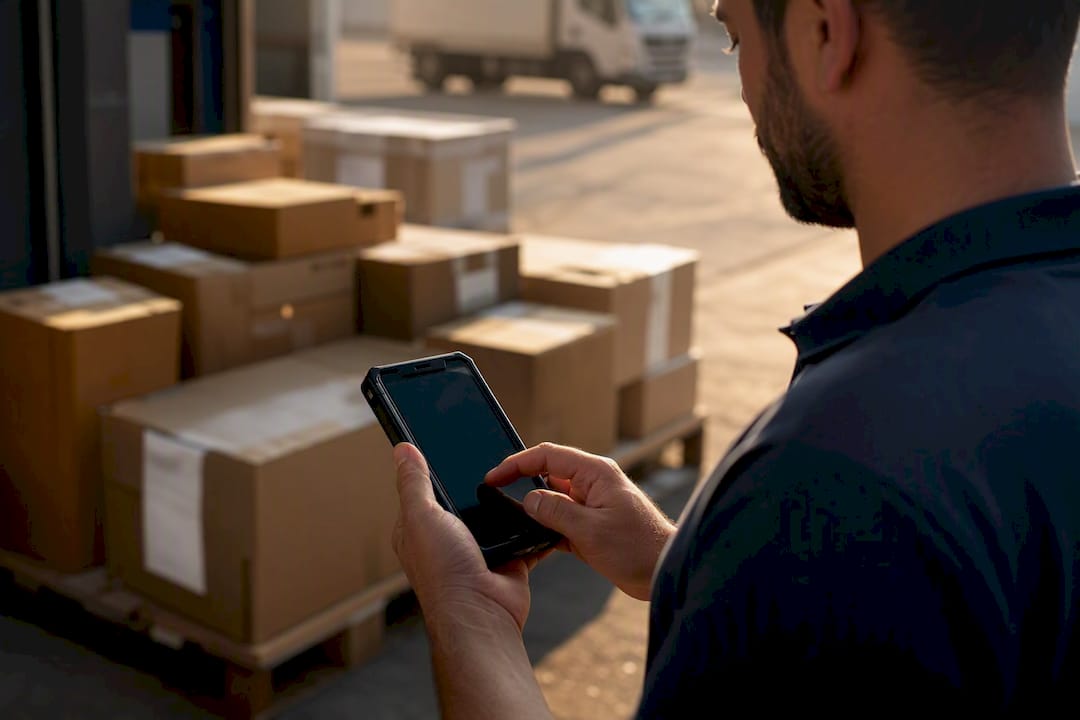
Electronic proof of delivery is a digital record that a delivery happened: a timestamp, a location, who received it, and usually a photo or a signature captured on the driver's phone. It replaces the paper slip that used to ride back to the office in a van. The practical difference is not the paper, it is that the record exists the moment the driver walks away, and anyone who needs it can see it without making a phone call.
What a proper ePOD record contains
Not all of these are always required, but this is the full set worth expecting:
- Timestamp of the delivery, and ideally of the pickup too.
- Location where the delivery was completed.
- Recipient name, typed or signed, rather than "left at door" with nothing else.
- Signature captured on screen, or a photo when nobody signs.
- Item detail, piece count or reference number, so the record ties to a specific shipment.
- Exception reason when something did not go to plan: refused, nobody home, wrong address, damaged.
That last one gets skipped and it is the most useful field on the list. A delivery that failed with a documented reason is a problem you can fix. A delivery that failed with a blank field is an argument next week.
Is a signature on a phone actually legally valid?
Yes, and it is worth knowing the specific reason, because customers occasionally push back on it.
Under the federal E-SIGN Act, 15 U.S.C. 7001, in any transaction affecting interstate commerce "a signature, contract, or other record relating to such transaction may not be denied legal effect, validity, or enforceability solely because it is in electronic form." Washington has its own version too, the Uniform Electronic Transactions Act at RCW 1.80.060, which gives legal recognition to electronic records, signatures and contracts.
So a screen signature is not a weaker version of ink. In a dispute, the thing that decides it is the completeness of the record, a timestamp and a named recipient and a photo, not whether a pen was involved.
What ePOD actually fixes
Disputes end faster. "We never received it" is answered with a photo of the package at the door, taken at 10:31, signed by a named person. Most disputes stop there.
You can invoice sooner. When the proof is attached to the delivery as it completes, billing does not wait for paperwork to come back from a van. For operations invoicing on completed delivery, that is days off the cycle.
Your team stops chasing drivers. The single biggest time saving is not the paperwork, it is the phone calls. When a customer asks where something is and the answer is on a screen, nobody has to interrupt a driver mid route.
Failures become visible. Exception reasons collected consistently show you the pattern: one address that never has anyone in, a receiving dock that closes earlier than you thought, a customer who always refuses on Fridays.
Where it matters most
Regulated deliveries. For clinical work the record is the point. A medical courier run needs a documented handoff at both ends, because an audit asks who held the specimen and when. Paper answers that slowly and sometimes not at all.
High volume routes. On a scheduled route with dozens of stops, per stop proof is the only way to answer a question about stop 34 without reconstructing the day.
Anything delivered to a consumer's door. If your customer is not there to sign, a photo is the difference between a refund and a resolved query. That is why our food brand routes capture one on every drop.
Buying it, or getting it included
There are two situations and they are very different.
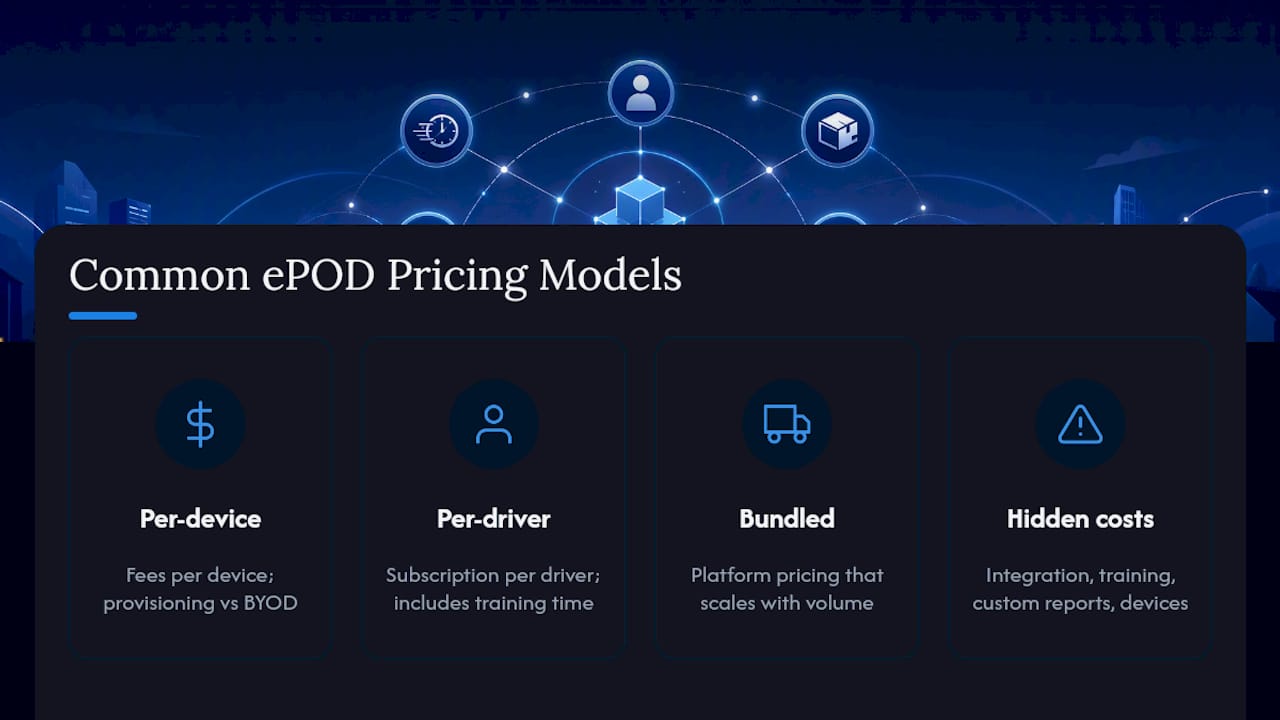
You run your own drivers. Then you are buying ePOD software, priced per driver per month, plus setup and training. Worth evaluating: does it work offline when a driver is in a basement, how long are photos retained, can you export records, and does it connect to whatever you already bill from.
You use a courier. Then you should not be paying extra for any of it. Proof of delivery is part of the service, and the questions to ask are about the record rather than the software: what is captured on every stop, how quickly can you see it, how long is it kept, and can you pull it yourself without asking dispatch.
A courier who charges separately for proof of delivery, or who can only produce it by emailing you a photo hours later, is selling you something that should be standard.
What to ask before you sign
- What exactly is captured at each stop, and is a photo taken when nobody signs?
- How soon does it appear, and can our team see it without calling you?
- How long are records kept, and can we export them?
- What happens when the driver has no signal at the delivery point?
- Are exception reasons recorded, and can we get a report of them?
How AMCO handles it
Every delivery we run is timestamped at pickup and at drop off, with a signature or a photo captured at the handoff. Those records sit in your portal, so your team can check a delivery themselves rather than calling dispatch, and they stay there so you can look back at last month rather than reconstructing it.
It is included. There is no separate line for proof of delivery on an AMCO invoice, on a one off job or on a daily route, because a delivery you cannot prove is not really finished.
Want to see what the record looks like?
Send us a route or a single delivery and we will show you exactly what gets captured at each stop.
Frequently asked questions
What is electronic proof of delivery?
A digital record confirming a delivery took place, captured on the driver's device. It normally includes a timestamp, location, recipient name, and a signature or photo, replacing the paper delivery note.
Is an electronic signature legally binding?
Yes. The federal E-SIGN Act at 15 U.S.C. 7001 says a signature or record cannot be denied legal effect solely because it is electronic, and Washington gives the same recognition under RCW 1.80.060. What decides a dispute is how complete the record is, not whether a pen was used.
What is the difference between POD and ePOD?
Only the format. Traditional POD is a signed paper slip that travels back to the office. ePOD is the same confirmation captured digitally, available immediately and searchable later.
Does ePOD work without a signal?
Good systems capture offline and upload when the device reconnects, which matters for basements, loading docks and rural stops. Worth confirming, because a system that needs a live connection will lose records.
How much does ePOD cost?
If you run your own fleet you pay per driver per month for software, plus setup. If you use a courier it should be included in the delivery price, not charged separately.
How long should proof of delivery records be kept?
Long enough to cover your billing disputes and any regulatory requirement that applies to what you ship. Ask your courier for their retention period in writing, and check you can export the records rather than only view them.
Sources
- 15 U.S.C. 7001, General rule of validity, Legal Information Institute, Cornell Law School.
- Electronic Signatures in Global and National Commerce Act, US Government Publishing Office.
- RCW 1.80, Uniform Electronic Transactions Act, Washington State Legislature.
Related articles
The Role of a Courier in Supply Chain Operations
Couriers move what parcel and freight networks cannot: the same day lane, the regulated delivery, the part that stops a line. Here is where

How to Ship Oversized Freight in Washington State
Freight is oversized in Washington past 8 feet 6 inches wide, 14 feet tall or 40 feet long. Here are the real permit limits, costs, lead tim
What Is a Delivery Quote? How to Get an Accurate One
A delivery quote is a carrier's cost estimate, not a final invoice. Here is what it includes, why weight and dimensions decide its accuracy,