The Role of a Courier in Supply Chain Operations
Jump to section
A courier is the part of your supply chain that moves what cannot wait. Freight carriers move volume on a schedule. Parcel networks move small packages through sorting hubs. A courier moves a specific item from one address to another, usually the same day, usually direct, with no hub in between. That difference is the whole point, and it is why couriers sit in supply chains that otherwise run on much larger carriers.
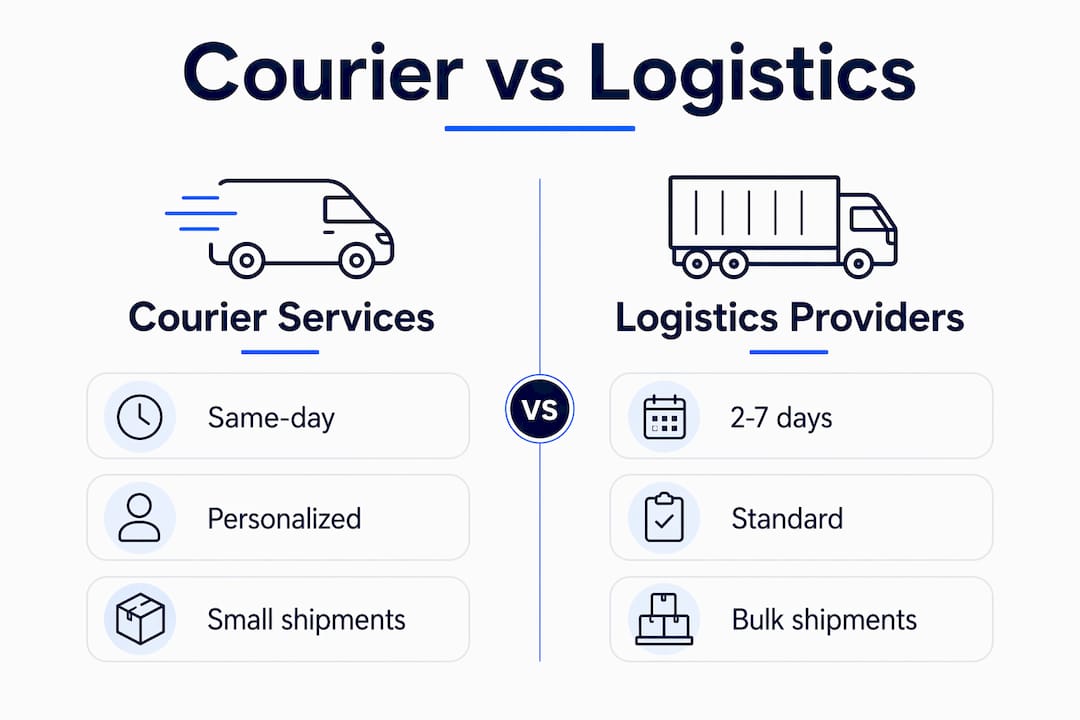
How couriers differ from parcel and freight
The three are not competing versions of the same service. They solve different problems.
- Parcel networks collect packages, run them through sorting hubs, and deliver on a network schedule. Cheap per package, excellent at volume, and slow when you need something in four hours.
- Freight carriers move pallets and consolidated loads between terminals. Cost effective per pound, planned days ahead, not built for a single item.
- Couriers move point to point. One driver, one vehicle, pickup to delivery with nothing in between. Higher cost per item, and the only option when the timeline is hours.
Most operations use all three. The mistake is treating the courier as an emergency fallback rather than a planned lane, which is how you end up paying rush rates for something that happens every week.
What couriers actually do for a supply chain
They let you hold less stock
Safety stock exists because replenishment is slow. When a part can move across the metro in three hours, you can carry less of it. That is working capital freed up, and for expensive or slow moving parts it adds up faster than the delivery cost.
They protect the promise you made
A supply chain is judged at the last step. Your customer does not see the warehouse or the carrier network, they see whether the thing arrived when you said. A missed delivery is a service failure regardless of where in the chain it went wrong.
They give you a second option when the main one fails
Carrier disruptions happen. A weather event, a terminal backlog, a truck that breaks down. Having a local courier already set up as a lane, with pricing agreed and an account open, is the difference between a workaround and a crisis.
They handle what the networks will not
Chain of custody paperwork, temperature sensitive items, high value goods that cannot go through a sorting hub, deliveries that need a signature from a named person. Regulated work fails on the documentation, not the driving.
Regulated and high value lanes
Some categories cannot use a standard network at all.
Healthcare. Specimens, pharmaceuticals and medical supplies need documented handoffs. What matters is a timestamped, signed record of who held the item at every step, because that record is what an audit asks for. Our medical courier work is built around that rather than around speed alone.
High value goods. Anything where the loss of one item is expensive enough that the delivery cost is irrelevant. Direct transport with no intermediate handling reduces the number of chances something goes missing.
Time critical production parts. A line stopped for a missing component costs more per hour than any courier invoice. That is the calculation to make, not the per mile rate.
How to integrate a courier properly
Set it up before you need it. Open the account, agree the rates, and confirm coverage while nothing is on fire. Sourcing a courier during a disruption means paying whatever is quoted.
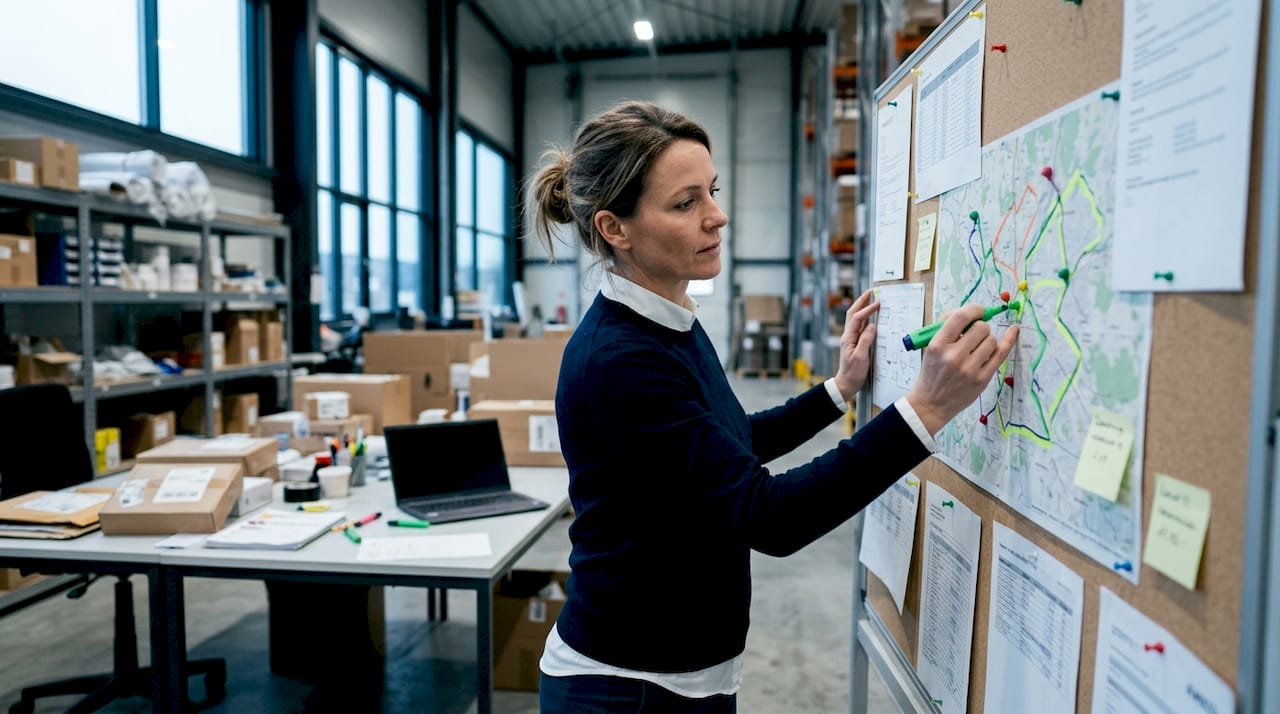
Treat repeat work as a route. If you send the same lane twice a week, it is a scheduled route, not a series of urgent jobs. A dedicated route prices per stop, and dense routes price lowest per door. This is the single biggest cost lever most operations miss.
Match the vehicle to the job. A car for documents and small parts, a cargo van for pallets and bulk, a box truck for anything that needs a liftgate. Paying for a box truck to move an envelope is a common and avoidable cost.
Track the right numbers. Four KPIs tell you most of what you need:
- On time percentage against the window you actually promised your customer, not the carrier's own definition.
- Proof of delivery capture rate. A delivery with no photo or signature is a dispute waiting to happen.
- Exception rate. How often something needed a second attempt, and why.
- Cost per stop rather than cost per job. Per stop is what shows whether route consolidation is working.
Keep more than one carrier. A single courier is a single point of failure. Two is enough.
How AMCO fits into a supply chain
We run same day and scheduled courier work across the Seattle metro and Washington state, for customers whose supply chains mostly run on larger carriers and who need a local option for the parts that cannot wait.
What that looks like in practice: quotes come back within about 30 minutes during business hours, priced on real driving miles between your ZIP codes with the mileage shown. Recurring work is built as a route with a dedicated driver and a trained backup, so the same person runs your stops rather than whoever is free. Every delivery carries photo and signature proof, and it lands in a portal your team can check without calling dispatch.
For volume that belongs on a network, use a network. Companies like Or-Ner and NimbusPost handle multi carrier shipping at a scale a regional courier is not built for. Where we help is the local lane underneath that: the same day run, the recurring route, the delivery that has to be documented.
Setting up a local lane before you need it?
Send the lane, the frequency and the vehicle type. We will price it as a route and open the account so it is ready when something breaks.
Frequently asked questions
What is the role of a courier in a supply chain?
To move specific items point to point on a timeline the parcel and freight networks cannot meet. Couriers cover same day replenishment, time critical parts, regulated deliveries needing documented custody, and backup capacity when a primary carrier fails.
How is a courier different from a logistics provider?
A logistics provider designs and manages the whole flow, including warehousing, freight and network design. A courier executes one movement, directly, usually same day. Many supply chains use both, with the courier as a lane inside the broader plan.
Why do regulated industries need specialized couriers?
Because the requirement is documentation, not just transport. Healthcare and laboratory work needs timestamped custody records, trained handling and proof at each handoff. A standard network cannot produce that record, which is what an audit asks for.
Which KPIs should I track for courier performance?
On time percentage against your promised window, proof of delivery capture rate, exception rate, and cost per stop. Cost per stop matters more than cost per job, because it shows whether consolidating into routes is actually working.
When should I use a courier instead of parcel shipping?
When the delivery window is measured in hours, when the item cannot go through a sorting hub, when you need a documented chain of custody, or when the cost of it arriving late is larger than the difference in shipping cost.
Is a courier more expensive than parcel?
Per item, yes. Per outcome, often not. Compare against the cost of a stopped production line, an expedited reorder, or a customer who leaves. And if the lane repeats, price it as a scheduled route, which usually costs far less per delivery than booking individual jobs.
Sources
- Or-Ner, logistics and shipping solutions.
- NimbusPost, multi carrier shipping platform.
- iThink Logistics.
- Go2Delivery.
- SuiteFleet.
Related articles
Electronic Proof of Delivery: What It Is and Why It Matters
A timestamp, a location, a name and a photo, captured the moment the driver walks away. What belongs in an ePOD record, whether a screen sig

How to Ship Oversized Freight in Washington State
Freight is oversized in Washington past 8 feet 6 inches wide, 14 feet tall or 40 feet long. Here are the real permit limits, costs, lead tim
What Is a Delivery Quote? How to Get an Accurate One
A delivery quote is a carrier's cost estimate, not a final invoice. Here is what it includes, why weight and dimensions decide its accuracy,