How to Organize an Outpatient Lab Courier Schedule

Jump to section
Build the schedule backwards. Start from your lab's cutoff time and your specimens' stability windows, then work back to a pickup time that lands inside both. Most clinics do the opposite, they take whatever pickup slot the courier offers and then spend their week calling for STAT runs to cover the gap.
Six steps, in the order that actually works.
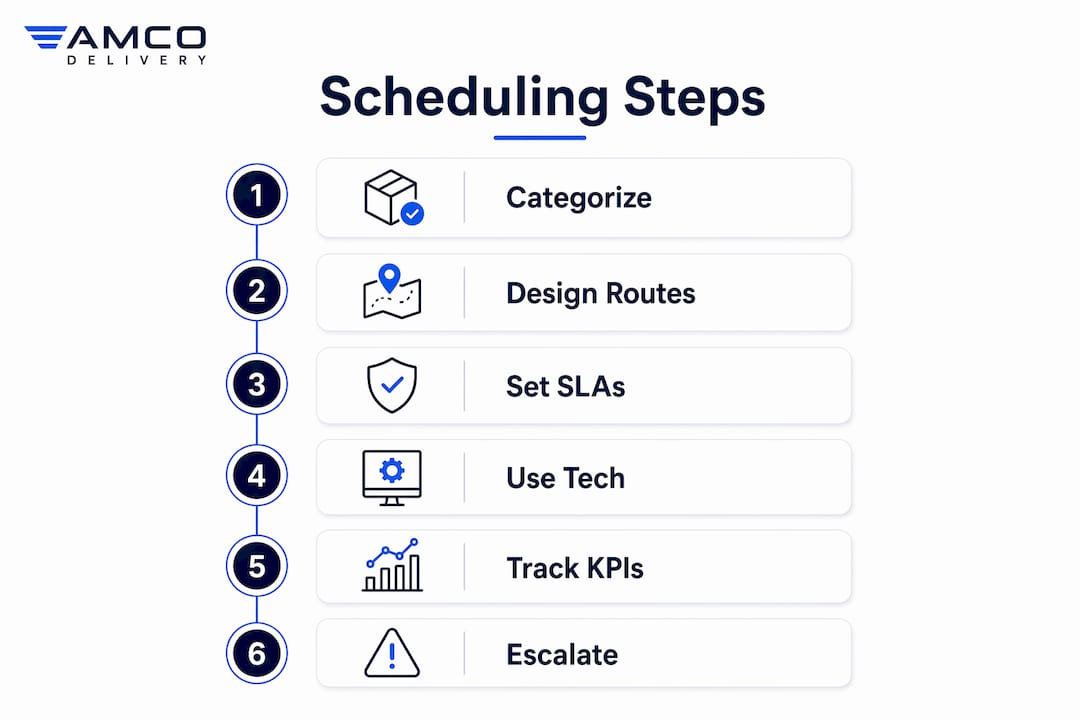
1. Sort your specimens before you think about routes
Pull a month of your outpatient volume and group it three ways:
- Short window. Anything your lab requires to arrive within a couple of hours of collection, or that needs processing before it degrades. These set your schedule.
- Same day. Stable long enough to ride an afternoon pickup, but not overnight.
- Flexible. Stable for a day or more. These can fill whatever run is convenient.
Your reference lab publishes stability and handling requirements per test. That document, not the courier's availability, is what determines how often someone has to come.
2. Work backwards from the cutoff
Write down three numbers: the time your lab stops accepting same day work, how long transport takes from your clinic, and how long your staff needs between collection and handover.
A lab cutting off at 3pm, forty minutes away, with fifteen minutes of prep, means the specimen has to leave you by about 2pm. Not 2:45, because a single traffic delay then costs you a day. Build in the buffer at the design stage rather than discovering it on a bad afternoon.
3. Pick a frequency you can defend
One pickup a day is cheapest and works when your draws cluster and nothing is short window. Two pickups, usually late morning and late afternoon, is the common answer for clinics with steady outpatient volume, because it halves the time a morning draw sits waiting.
The honest test: count how many STAT runs you ordered last month. If it is more than two or three, you are already paying for a second pickup, just at a worse rate and with more phone calls. Adding a scheduled run is usually cheaper than the STATs it replaces.

4. Put the terms in writing
Agree these before the first pickup, not after the first miss:
- The window, expressed as a range you can hold them to, not "late morning".
- Who arrives, and what happens when that driver is off. A named backup or nothing.
- Handoff record: timestamp and signature at your end and at the lab, retained and retrievable by you.
- STAT response: how fast, and what it costs, agreed in advance so nobody negotiates during an emergency.
- Escalation: a named phone number, and how long you wait before using it.
- Notice for schedule changes in either direction.
5. Decide the escalation path now
The pickup is fifteen minutes late. What happens? Most clinics improvise, which means a medical assistant is on hold while specimens sit.
Write the rule instead: at fifteen minutes past the window, front desk calls dispatch on the direct number. At thirty, the practice manager decides whether to order a STAT run or hold for the next scheduled pickup. At sixty, the lab is told to expect a late delivery and the affected patients are identified.
Three lines, and nobody has to invent a decision under pressure.
6. Track four numbers, monthly
- Collection to lab receipt. The interval that matters clinically, not pickup to delivery.
- Pickups inside the agreed window, as a percentage.
- STAT runs ordered, and the reason for each. This is your schedule design telling you something.
- Redraws caused by transport, which should be zero.
Four numbers on one page. If a courier cannot give you the first two, that is its own answer.
The mistake most clinics make
Optimizing the wrong thing. It is natural to ask a courier for the most efficient route, but efficiency for the driver and speed for your specimen are not the same objective, and on a multi stop run they actively compete.
The operations research on this problem is explicit about it. Rocha, Otto and Goerigk's 2024 formulation of the biomedical specimen collection and delivery problem optimizes for total completion time of delivery requests under time windows, not for distance driven. That is the right objective for a clinic too. Ask your courier what time specimens reach the lab, not how efficient the route is.
How AMCO runs clinic pickups
We build outpatient lab pickups as a dedicated route: an assigned driver, a trained backup, and a window agreed against your lab's cutoff rather than our convenience. Same driver, same time, which is what makes a schedule something your staff stops thinking about.
Every pickup and delivery is timestamped and signed, and the record sits in your portal so you can check a specific day without calling us. When something genuinely urgent comes up, a STAT run is dispatched direct, though our usual first suggestion is to look at whether a second scheduled pickup would remove the need. Full details on our medical courier service.
Before quoting, we ask for your draw pattern by hour and your lab's cutoff. Those two things determine the schedule. Everything else is arithmetic.
Want your pickup times checked against your lab cutoff?
Send your draw pattern and the cutoff. We will tell you what the schedule should be, and price it.
Frequently asked questions
How many lab pickups a day does an outpatient clinic need?
Most steady outpatient clinics land on two, late morning and late afternoon, which stops a morning draw waiting all day. One is enough when draws cluster and nothing has a short stability window. If you are ordering STAT runs more than two or three times a month, you already need the second pickup.
How do I decide the pickup time?
Work backwards from your lab's same day cutoff. Subtract transport time and the time your staff needs to prepare specimens, then subtract a buffer for traffic. That is your latest safe pickup, and the scheduled time should sit before it.
What should a lab courier agreement include?
A pickup window expressed as a range, a named backup driver, timestamped and signed handoff records you can retrieve yourself, agreed STAT response time and price, an escalation number, and notice periods for schedule changes.
What should happen when a pickup is missed?
Decide in advance. A workable rule is: call dispatch at fifteen minutes past the window, decide between a STAT run and waiting at thirty, and notify the lab and identify affected patients at sixty.
Should I use one courier or several?
One provider for the scheduled route, so the same driver learns your clinic and your lab. Keep a second account open and tested for backup. A single courier with no alternative is a single point of failure in a clinical workflow.
What is the most common scheduling mistake?
Building the schedule around courier availability instead of specimen stability and lab cutoffs, then covering the resulting gap with STAT calls. It costs more and it is less reliable.
Sources
- A new formulation for the collection and delivery problem of biomedical specimen, Rocha, Otto and Goerigk, 2024.
- Specimen collection routing research, Annals of Operations Research.
- Managing off-site phlebotomy: considerations for specimen transport, Mayo Clinic Laboratories.
Related articles
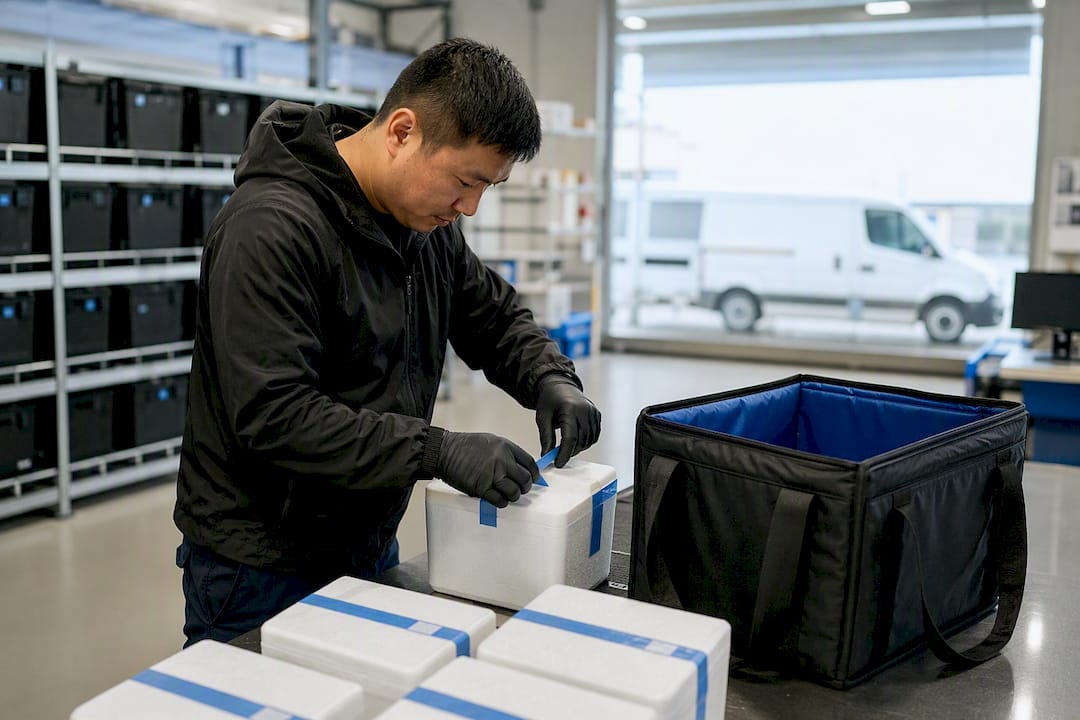
Pharmacy Delivery Chain of Custody: A Practical Playbook
Under DEA rules, choosing your courier is part of your compliance position, not just procurement. What a custody record must contain, where
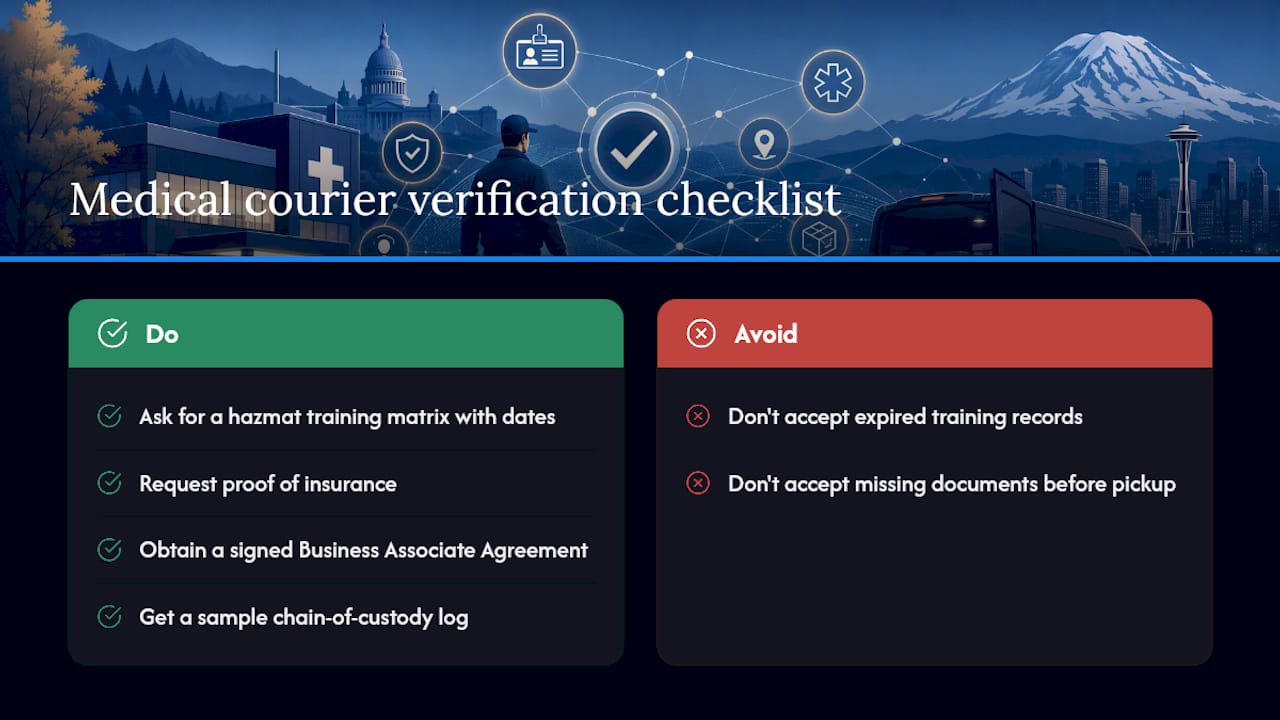
Medical Courier Requirements in Washington: Full Checklist
What the specimen requires and what the courier must produce, in one place: UN3373 packaging measurements, OSHA training and Exposure Contro
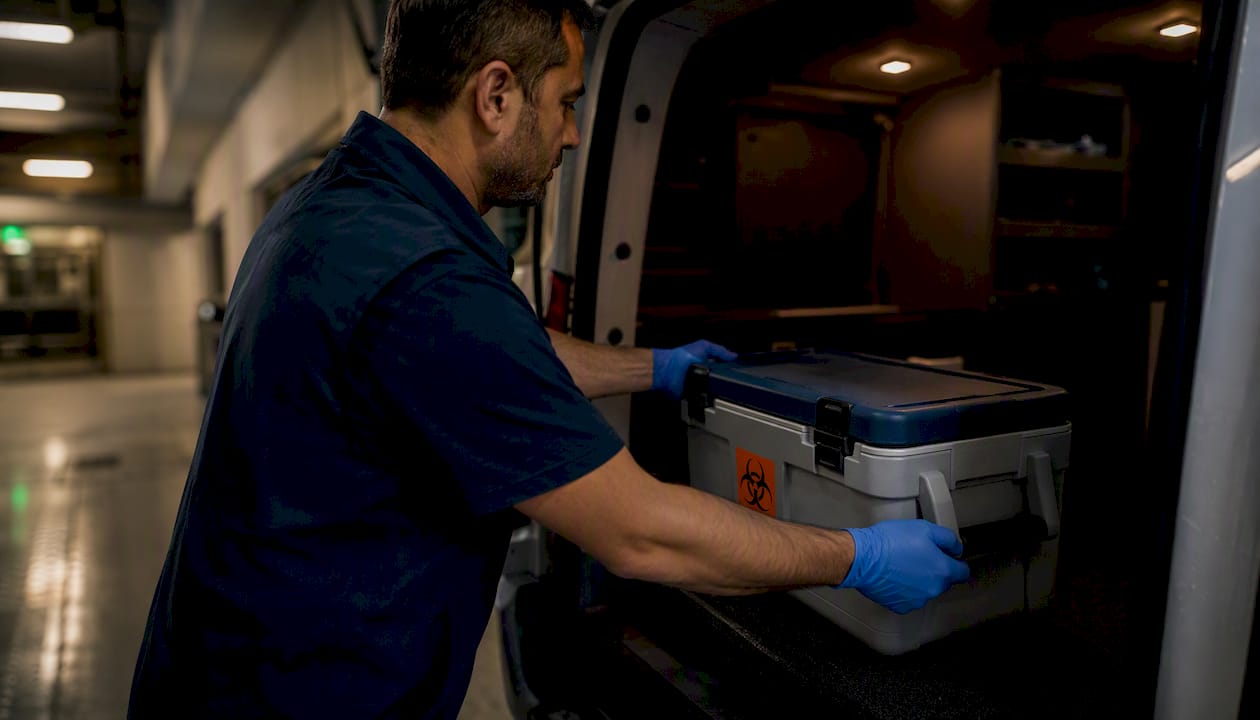
STAT vs Routine Lab Courier: What Healthcare Teams Should Know
STAT goes direct and alone, routine rides a scheduled route. The real question is whether the result changes treatment in the next hour, and